Showing posts with label John Patton. Show all posts

Monday, September 14, 2026

'Big' John Patton • The Organization! The Best of 'Big' John Patton


Artist Biography
 Big John Patton was born July 12, 1935 in Kansas City, Missouri. A self-taught musician, he started playing the piano in 1948 and landed his first big gig touring with R&B sensation Lloyd Price from 1954-1959.
Upon his arrival in New York, around 1960, Patton began making the transition from piano to organ. Throughout the 1960's he recorded extensively for Blue Note Records as a leader and sideman, most notably with Grant Green and Lou Donaldson.
His music evolved to incorporate elements of modal and free jazz, without ever losing the basic, earthy groove that he brought to it from the beginning.
He wrote some organ jazz classics such as “Funky Mama” and “The Yodel.” His music will be remembered fondly by musicians and fans. During the late 60's Patton recorded some very adventurous music for the Blue Note label with artists such as Harold Alexander and George Coleman on lps such as Understanding and Accent on the Blues. Of particular note on the early sessions recorded for Blue Note both under his own name and also with George Braith, Don Wilkerson and Lou Donaldson was the superlative empathy he developed with guitarist Grant Green and drummer Ben Dixon - an organ trio whose work in the soul jazz genre remains unsurpassed to this day.
Since the resurgence in interest in music from this period Blue Note has unearthed many sessions that were buried in the vaults. LPs such as Blue John which was actually penciled for release, but never was, and two fantastic (and forward looking) albums Boogaloo and Memphis New York Spirit saw the light of day and showed the world more of this exceptional artist's work.
https://musicians.allaboutjazz.com/bigjohnpatton

///////

Biografía del artista
 Big John Patton nació el 12 de julio de 1935 en Kansas City, Missouri. Músico autodidacta, comenzó a tocar el piano en 1948 y consiguió su primer gran concierto de gira con la sensación del R&B Lloyd Price entre 1954 y 1959.
A su llegada a Nueva York, alrededor de 1960, Patton comenzó a hacer la transición del piano al órgano. A lo largo de los años 60 grabó extensamente para Blue Note Records como líder y sideman, sobre todo con Grant Green y Lou Donaldson.
Su música evolucionó para incorporar elementos del jazz modal y libre, sin perder nunca el groove básico y terrenal que le aportó desde el principio.
Escribió algunos clásicos del jazz de órgano como "Funky Mama" y "The Yodel". Su música será recordada con cariño por músicos y aficionados. A finales de los 60's Patton grabó música muy aventurera para el sello Blue Note con artistas como Harold Alexander y George Coleman en lps como Understanding y Accent on the Blues. De particular importancia en las primeras sesiones grabadas para Blue Note tanto bajo su propio nombre como con George Braith, Don Wilkerson y Lou Donaldson fue la superlativa empatía que desarrolló con el guitarrista Grant Green y el baterista Ben Dixon - un trío de órgano cuyo trabajo en el género de soul jazz sigue siendo insuperable hasta el día de hoy.
Desde el resurgimiento del interés por la música de este periodo, Blue Note ha desenterrado muchas de las sesiones que fueron enterradas en las bóvedas. LPs como Blue John, que en realidad fue escrito para su lanzamiento, pero nunca lo fue, y dos álbumes fantásticos (y con visión de futuro) Boogaloo y Memphis New York Spirit vieron la luz del día y mostraron al mundo más del trabajo de este artista excepcional.
https://musicians.allaboutjazz.com/bigjohnpatton


Thursday, July 30, 2026

VA • Blue Note Rare Grooves


Brother Jack McDuff, Candido, Donald Byrd, Elvin Jones, Jimmy McGriff, John Patton, Larry Young, Reuben Wilson, Richard ''Groove'' Holmes, Stanley Turrentine. 


Wednesday, July 29, 2026

Grant Green • Iron City


By DOUGLAS PAYNE
Published: April 1, 1998
For guitarist Grant Green (1931-79), the years between 1965 and 1969 were lost in a battle with drugs. His graceful, easily identifiable single note phrases had caught many listeners' attention with a wide variety of excellent Blue Note dates between 1960 and 1965. Seemingly able to master any style, he never once diminished the force or appeal of his own personality. Leaving Blue Note, he recorded two albums for Verve in 1965 (one remains unreleased), then wasn't heard from again until 1969. But somewhere in 1967, he teamed with former Lou Donaldson rhythm-mates John Patton (organ) and Ben Dixon (drums) and recorded, Iron City, his best ever organ-trio record.

Presumably recorded for then-thriving Prestige Records, Iron City was first issued in 1972 on Cobblestone Records and again in 1978 on Muse. Now that 32Jazz has introduced it on CD, a new generation of jazz listeners can hear how forceful the guitarist could be in the right funk. Freed from the constraints of well-rehearsed Blue Note staidness, Green and company let loose here in a rip-roaring, mostly up-tempo program of solid winners.

Green's own "Iron City" is one of his catchiest funk pieces and Patton and Dixon are down, deep in the groove. This trio even swings Luis Bonfa's sticky-sweet, overplayed "Samba de Orfeu" so hard its titled "Samba de Orpheus." "Old Man Moses," (which Green first covered in 1962 on the excellent Feelin' the Spirit ), is the disc's centerpiece. Stating the theme, the trio works itself into "A Love Supreme" groove and responds with praiseworthy playing that shows how well good heads can work the feet.

Patton is especially muscular and memorable here and, overall, pulls off one the best performances of his career (acid-jazzers could find plenty of meaty samples here too). "High Heeled Sneakers" and "Work Song" are the standard soul-jazz warhorses - but each gets thorough, no-holds-barred workouts from Green and crew. The moody blue of "Motherless Child" (another return to Feelin' the Spirit ) is also sensitively - and intuitively - handled by the trio, but in a way that does not compromise toward sentimentality.

The disc's sound is pristine and really brings out Patton's pedalwork and Dixon's subtle technique more than the old records did. Iron City is, if not Green's best organ-trio record, surely his last "great" recorded performance. After returning to active recording in 1969, he resorted to mostly mindless vamps, rehashed pet licks and, too often, the company of associates and material well beneath his talent. Iron City suggests that only the best was to still to come.

///////

Por DOUGLAS PAYNE
Publicado: 1 de abril de 1998
Para el guitarrista Grant Green (1931-79), los años entre 1965 y 1969 se perdieron en una batalla contra las drogas. Sus elegantes y fácilmente identificables frases de una sola nota habían llamado la atención de muchos oyentes con una amplia variedad de excelentes fechas de Blue Note entre 1960 y 1965. Aparentemente capaz de dominar cualquier estilo, nunca disminuyó la fuerza o el atractivo de su propia personalidad. Dejando Blue Note, grabó dos álbumes para Verve en 1965 (uno permanece inédito), y luego no se supo de él hasta 1969. Pero en algún momento de 1967, se unió a sus antiguos compañeros de ritmo de Lou Donaldson John Patton (órgano) y Ben Dixon (batería) y grabó Iron City, su mejor disco de órgano y trío.

Presumiblemente grabada para los entonces prósperos Prestige Records, Iron City se publicó por primera vez en 1972 en Cobblestone Records y de nuevo en 1978 en Muse. Ahora que 32Jazz lo ha presentado en CD, una nueva generación de oyentes de jazz puede escuchar lo enérgico que puede ser el guitarrista en el funk adecuado. Liberados de las limitaciones de la bien ensayada seriedad de Blue Note, Green y compañía se dejaron llevar por un programa de ganadores sólidos, en su mayoría a ritmo acelerado.

La propia "Ciudad de Hierro" de Green es una de sus piezas de funk más pegadizas y Patton y Dixon están en el fondo de la onda. Este trío incluso sacude el pegajoso y dulce "Samba de Orfeu" de Luis Bonfa con tanta fuerza que se titula "Samba de Orpheus". "Old Man Moses," (que Green cubrió por primera vez en 1962 en el excelente Feelin' the Spirit), es la pieza central del disco. En cuanto al tema, el trío se trabaja a sí mismo en el ritmo de "A Love Supreme" y responde con una interpretación loable que demuestra lo bien que las buenas cabezas pueden hacer funcionar los pies.

Patton es especialmente musculoso y memorable aquí y, en general, consigue una de las mejores actuaciones de su carrera (los acid jazzers también pueden encontrar muchas muestras de carne aquí). Las "Zapatillas de tacón alto" y la "Canción de trabajo" son los caballos de guerra estándar de soul-jazz - pero cada uno recibe entrenamiento completo y sin restricciones de Green y la tripulación. El azul malhumorado de "Motherless Child" (otro regreso a Feelin' the Spirit) también es manejado sensible e intuitivamente por el trío, pero de una manera que no compromete el sentimentalismo.

El sonido del disco es prístino y realmente resalta el pedaleo de Patton y la técnica sutil de Dixon más de lo que lo hacían los viejos discos. Iron City es, si no el mejor disco de órgano y trío de Green, seguramente su última "gran" actuación registrada. Después de regresar a la grabación activa en 1969, recurrió en su mayoría a vampiros descerebrados, volvió a lamer mascotas y, con demasiada frecuencia, a la compañía de asociados y material muy por debajo de su talento. Iron City sugiere que sólo lo mejor estaba por venir.


Tuesday, July 28, 2026

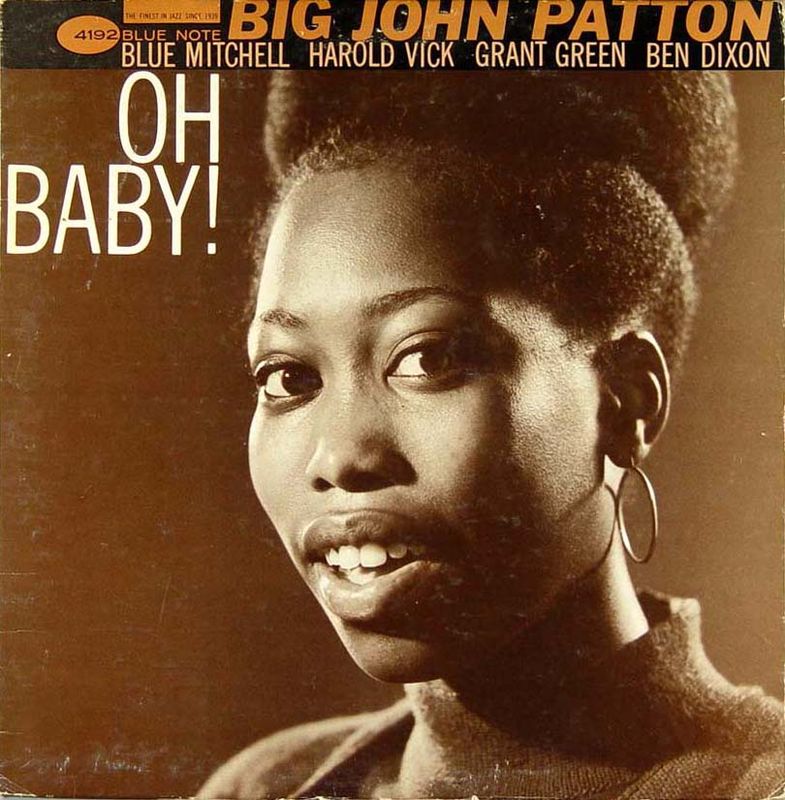
Big John Patton • Oh Baby


Review:
Patton's fourth album for Blue Note. Big John Patton with Grant Green on guitar and Harold Vick on tenor sax. With tunes like "Fat Judy" and "Good Juice," there is no worry about there being a groove. The addition of a trumpet (Blue Mitchell) means you have a horn section, and this tends to be a little much now and again. Although a little on the light side, thanks to Patton and Green, the groove does go down.
by Michael Erlewine
https://www.allmusic.com/album/oh-baby%21-mw0000766666

///////

Reseña:
El cuarto álbum de Patton para Blue Note. Big John Patton con Grant Green en la guitarra y Harold Vick en el saxo tenor. Con temas como "Fat Judy" y "Good Juice", no hay que preocuparse de que haya un ritmo. La adición de una trompeta (Blue Mitchell) significa que tienes una sección de trompetas, y esto tiende a ser un poco demasiado de vez en cuando. Aunque un poco en el lado de la luz, gracias a Patton y Green, el surco se reduce.
por Michael Erlewine
https://www.allmusic.com/album/oh-baby%21-mw0000766666


Friday, July 17, 2026

Don Wilkerson • Shoutin'


 Artist Biography
The archetypal big-toned Texas tenor of Don Wilkerson was unfortunately not documented on record as much as the quality of his music deserved; he was an excellent, earthy soul-jazz saxophonist capable of playing blues, ballads, bop, swing, and gospel-tinged R&B. Wilkerson was born in Moreauville, LA, in 1932, and first learned the alto sax; by his teens, he had moved to Houston and was accomplished enough on tenor to play with R&B outfits headed by Amos Milburn and Charles Brown. Wilkerson played on some of Ray Charles' earliest recording sessions in the mid-'50s, taking memorable solos on classics like "I Got a Woman," "This Little Girl of Mine," and "Hallelujah I Love Her So." He also led a band in Miami for a short time, and participated in numerous jam sessions with Cannonball Adderley. Adderley produced Wilkerson's first recording session, a 1960 date for Riverside titled The Texas Twister. After another short stint with Charles, he signed with Blue Note and recorded three stellar, soulful albums over 1962-1963: Elder Don, Preach, Brother!, and Shoutin', all of which featured Grant Green on guitar. Unfortunately, none was very successful, and Wilkerson didn't record any further as a leader. He remained in Houston for most of his life and passed away on July 18, 1986.
Steve Huey
https://www.allmusic.com/artist/don-wilkerson-mn0000161996/biography

///////

 Biografía del artista
El arquetípico tenor tejano de Don Wilkerson no estaba, por desgracia, tan documentado en los archivos como merecía la calidad de su música; era un excelente saxofonista de soul-jazz terrenal capaz de tocar blues, baladas, bop, swing y R&B con matices de gospel. Wilkerson nació en Moreauville, Los Ángeles, en 1932, y aprendió primero el saxo alto; en su adolescencia, se había mudado a Houston y tenía suficiente experiencia en el tenor como para tocar con equipos de R&B dirigidos por Amos Milburn y Charles Brown. Wilkerson tocó en algunas de las primeras sesiones de grabación de Ray Charles a mediados de los 50, haciendo memorables solos en clásicos como "I Got a Woman", "This Little Girl of Mine" y "Hallelujah I Love Her So". También dirigió una banda en Miami por un corto tiempo, y participó en numerosas jam sessions con Cannonball Adderley. Adderley produjo la primera sesión de grabación de Wilkerson, una fecha de 1960 para Riverside titulada "The Texas Twister". Después de otra corta temporada con Charles, firmó con Blue Note y grabó tres álbumes estelares y conmovedores durante 1962-1963: Elder Don, Preach, Brother!, y Shoutin', todos ellos con Grant Green a la guitarra. Por desgracia, ninguno tuvo mucho éxito, y Wilkerson no grabó más como líder. Permaneció en Houston la mayor parte de su vida y falleció el 18 de julio de 1986.
Steve Huey
https://www.allmusic.com/artist/don-wilkerson-mn0000161996/biography


Saturday, July 11, 2026

Wednesday, June 17, 2026

VA ‎• Blue Funk


Brother Jack McDuff, Blue Mitchell, Lou Donaldson, John Patton, Grant Green, Candido, Richard ''Groove'' Holmes, Ronnie Foster, Reuben Wilson, Bobby Hutcherson.


Wednesday, April 1, 2026

Jimmy Ponder • Jump


 Artist Biography by Scott Yanow
An excellent guitarist with a soulful sound and the ability to uplift any funky jazz date, Jimmy Ponder has appeared on many recordings during his long career, over 80 as a sideman and 15 as a leader. Ponder began playing guitar when he was 14 and considers Wes Montgomery and Kenny Burrell to be his two main early influences and Wes Montgomery later on. Offered a job with Charles Earland after having only played guitar three years, Ponder waited until he graduated from high school and then spent three years with the organist's group, recording several dates with Earland. He worked and recording with Lou Donaldson, Houston Person, Donald Byrd, Stanley Turrentine, and Jimmy McGriff and in the early '70s moved to New York (from Philadelphia), leading his own groups. Ponder has since recorded as a leader in the 1970s for Cadet, ABC/Impulse, TK, CBS, and Toshiba, in the '80s for Milestone, and in the '90s for Muse and HighNote. In the 21st century his albums included Ain't Misbehavin' (2000), Thumbs Up (2001), Alone (2003), What's New (2005), and Somebody's Child and Solo: Live at the Other Side, both released in 2007.

///////

Biografía del artista por Scott Yanow
Jimmy Ponder, un excelente guitarrista con un sonido conmovedor y la capacidad de mejorar cualquier cita del jazz funky, ha aparecido en muchas grabaciones durante su larga carrera, más de 80 como sideman y 15 como líder. Ponder comenzó a tocar la guitarra cuando tenía 14 años y considera que Wes Montgomery y Kenny Burrell son sus dos principales influencias tempranas y Wes Montgomery más tarde. Ofreció un trabajo con Charles Earland después de haber jugado solo la guitarra durante tres años, Ponder esperó hasta que se graduó de la escuela secundaria y luego pasó tres años con el grupo de organistas, grabando varias citas con Earland. Trabajó y grabó con Lou Donaldson, Houston Person, Donald Byrd, Stanley Turrentine y Jimmy McGriff, ya principios de los años 70 se mudó a Nueva York (desde Filadelfia), liderando sus propios grupos. Ponder ha registrado desde entonces como líder en la década de 1970 para Cadet, ABC / Impulse, TK, CBS y Toshiba, en los años 80 para Milestone y en los años 90 para Muse y HighNote. En el siglo XXI, sus álbumes incluyeron Ain't Misbehavin '(2000), Thumbs Up (2001), Alone (2003), What's New (2005) y Somebody's Child and Solo: Live at the Other Side, ambos lanzados en 2007.


Wednesday, March 11, 2026

Don Wilkerson • The Complete Blue Note Sessions


By DAVID ADLER
One of the paragons of the "Texas tenor" style, Don Wilkerson gained his greatest notoriety as a soloist with Ray Charles throughout much of the 50s and 60s. Less known is Wilkerson’s limited work as a leader, the majority of which is collected on this two-disc package from Blue Note. Wilkerson made three albums for the label during the fruitful years of 1962 and 1963: Preach Brother!, Elder Don, and Shoutin’! All three records feature guitarist Grant Green, who certainly knows how to cook in such a setting. The first also boasts a classic Blue Note rhythm section: Sonny Clark on piano, Butch Warren on bass, and Billy Higgins on drums, with Jual Curtis sitting in on tambourine on "Dem Tambourines" and "Camp Meetin’." On the second album, Johnny Acea takes over on piano, with Lloyd Trotman on bass and Willie Bobo on drums. The last of the three sessions is particularly down and dirty, with Green, John Patton on organ and Ben Dixon on drums.
The prevailing ethos of Preach Brother! is simply summarized: blues, blues, and more blues. And not the fancied-up bebop variety, but straight-up shuffle and boogie and soul. Every track is a blues except for the closer, "Pigeon Peas," a funky thing in AABA form. The two later albums are a bit more compositionally varied. Wilkerson begins Elder Don with exquisitely singing tenor work on "Senorita Eula" and then salutes his fellow Texan Bob Wills with "San Antonio Rose." (Grant Green’s solo on the latter has to be heard to be believed.) From this point on there’s still plenty of blues, but Wilkerson breaks it up with originals like "Scrappy" and "Drawin’ a Tip." He also showcases a totally different aspect of his talent on the ballads "Poor Butterfly" and "Easy Living."

///////

 Por DAVID ADLER
Uno de los parangones del estilo "tenor de Texas", Don Wilkerson ganó su mayor notoriedad como solista con Ray Charles durante gran parte de los años 50 y 60. Menos conocido es el limitado trabajo de Wilkerson como líder, la mayoría del cual se recoge en este paquete de dos discos de Blue Note. Wilkerson hizo tres álbumes para la discográfica durante los fructíferos años de 1962 y 1963: Preach Brother!, Elder Don, y Shoutin'! Los tres discos cuentan con la participación del guitarrista Grant Green, que ciertamente sabe cómo cocinar en un ambiente así. El primero también cuenta con una sección rítmica clásica de Blue Note: Sonny Clark en el piano, Butch Warren en el bajo, y Billy Higgins en la batería, con Jual Curtis en la pandereta en "Dem Tambourines" y "Camp Meetin'". En el segundo álbum, Johnny Acea se hace cargo del piano, con Lloyd Trotman en el bajo y Willie Bobo en la batería. La última de las tres sesiones es particularmente baja y sucia, con Green, John Patton en el órgano y Ben Dixon en la batería.
El espíritu prevaleciente del Predicador Hermano! se resume simplemente: blues, blues y más blues. Y no la variedad de bebop de fantasía, sino el shuffle y el boogie y el soul. Cada canción es un blues excepto la más cercana, "Pigeon Peas", una cosa funky en forma de AABA. Los dos álbumes posteriores son un poco más variados en cuanto a la composición. Wilkerson comienza Elder Don con un exquisito trabajo de tenor en "Señorita Eula" y luego saluda a su compañero tejano Bob Wills con "San Antonio Rose". (El solo de Grant Green en esta última tiene que ser escuchado para ser creído.) A partir de aquí todavía hay mucho blues, pero Wilkerson lo rompe con originales como "Scrappy" y "Drawin' a Tip". También muestra un aspecto totalmente diferente de su talento en las baladas "Poor Butterfly" y "Easy Living".


Monday, September 29, 2025

John Patton • That Certain Feeling


It took Big John Patton nearly twoyears to return to the studio as a leader following the sessions that produced the exceptional Got a Good Thing Goin'. When he finally cut its sequel, That Certain Feeling, the musical climate had changed just enough to make a difference in his music. Where Got a Good Thing Goin' was down and dirty, That Certain Feeling was smooth. That's not to say that it didn't groove -- it was just cleaner, which means that the groove wasn't as infectious or hot as before. Still, Patton and his band -- guitarist Jimmy Ponder, tenor saxophonist Junior Cook and drummer Clifford Jarvis -- play very well, and there are moments when everything comes together and it just cooks. And those are the moments that make That Certain Feeling worth a search. by Stephen Thomas Erlewine, AMG

///////

A Big John Patton le llevó casi dos años volver al estudio como líder tras las sesiones que produjeron el excepcional Got a Good Thing Goin'. Cuando finalmente cortó su secuela, That Certain Feeling, el clima musical había cambiado lo suficiente como para marcar la diferencia en su música. Where Got a Good Thing Goin' estaba abajo y sucio, That Certain Feeling era suave. Eso no quiere decir que no se moviera... sólo estaba más limpio, lo que significa que el ritmo no era tan infeccioso o caliente como antes. Aún así, Patton y su banda - el guitarrista Jimmy Ponder, el saxofonista tenor Junior Cook y el baterista Clifford Jarvis - tocan muy bien, y hay momentos en que todo se junta y se cocina. Y esos son los momentos que hacen que valga la pena buscar en That Certain Feeling. por Stephen Thomas Erlewine, AMG


Thursday, August 21, 2025

VA • The Best Blue Note Album In The World Ever


The perfect introduction to jazz by the genre's most legendary record label! This album is a great introduction to the Blue Note label and their incredible library of music, in fact there are probably enough great Blue Note tunes for another equally good compilation - New jazz converts will appreciate being able to use this as an introduction to the various artists.

With 20 classic tracks included on the two discs there is plenty of music to keep your fingers tapping - The songs are thoughtfully chosen and ordered so that it feels less like a compilation album and more like a mix - This means that even more seasoned jazz listeners will appreciate being able to slip in a couple of discs and get a couple of hours of great music without having to try and create their own mix


www.bluenote.com ...


Thursday, June 12, 2025

John Patton • The Way I Feel


Review by Stephen Thomas Erlewine
For his third album, Big John Patton decided to expand his band to quintet. Retaining the services of his longtime colleagues, guitarist Grant Green and drummer Ben Dixon, he hired tenor saxophonist Fred Jackson (who also played on Along Came John) and trumpeter Richard Williams.
The combination of two horns can occasionally overshadow the groove Patton, Green, and Dixon lay down, but for the most part the musicians augment the music instead of detracting from it. Nevertheless, the combo never manages to match the peaks of Along Came John and Blue John.
There are several fine moments on the record, and Green and Patton are typically enjoyable, but the record overall is a slight disappointment after its two predecessors.
https://www.allmusic.com/album/the-way-i-feel-mw0000759052


Artist Biography
 Big John Patton was born July 12, 1935 in Kansas City, Missouri. A self-taught musician, he started playing the piano in 1948 and landed his first big gig touring with R&B sensation Lloyd Price from 1954-1959.
Upon his arrival in New York, around 1960, Patton began making the transition from piano to organ. Throughout the 1960's he recorded extensively for Blue Note Records as a leader and sideman, most notably with Grant Green and Lou Donaldson.
His music evolved to incorporate elements of modal and free jazz, without ever losing the basic, earthy groove that he brought to it from the beginning.
He wrote some organ jazz classics such as “Funky Mama” and “The Yodel.” His music will be remembered fondly by musicians and fans. During the late 60's Patton recorded some very adventurous music for the Blue Note label with artists such as Harold Alexander and George Coleman on lps such as Understanding and Accent on the Blues. Of particular note on the early sessions recorded for Blue Note both under his own name and also with George Braith, Don Wilkerson and Lou Donaldson was the superlative empathy he developed with guitarist Grant Green and drummer Ben Dixon - an organ trio whose work in the soul jazz genre remains unsurpassed to this day.
Since the resurgence in interest in music from this period Blue Note has unearthed many sessions that were buried in the vaults. LPs such as Blue John which was actually penciled for release, but never was, and two fantastic (and forward looking) albums Boogaloo and Memphis New York Spirit saw the light of day and showed the world more of this exceptional artist's work.
https://musicians.allaboutjazz.com/bigjohnpatton

///////

Reseña de Stephen Thomas Erlewine
Para su tercer álbum, Big John Patton decidió expandir su banda al quinteto. Reteniendo los servicios de sus antiguos colegas, el guitarrista Grant Green y el baterista Ben Dixon, contrató al saxofonista tenor Fred Jackson (que también tocó en Along Came John) y al trompetista Richard Williams.
La combinación de dos trompetas puede ocasionalmente eclipsar el ritmo que Patton, Green y Dixon establecen, pero en su mayor parte los músicos aumentan la música en lugar de restarle importancia. Sin embargo, el combo nunca consigue igualar los picos de Along Came John y Blue John.
Hay varios buenos momentos en el disco, y Green y Patton son típicamente agradables, pero el disco en general es una pequeña decepción después de sus dos predecesores.
https://www.allmusic.com/album/the-way-i-feel-mw0000759052


Biografía del artista
 Big John Patton nació el 12 de julio de 1935 en Kansas City, Missouri. Músico autodidacta, comenzó a tocar el piano en 1948 y consiguió su primer gran concierto de gira con la sensación del R&B Lloyd Price entre 1954 y 1959.
A su llegada a Nueva York, alrededor de 1960, Patton comenzó a hacer la transición del piano al órgano. A lo largo de los años 60 grabó extensamente para Blue Note Records como líder y sideman, sobre todo con Grant Green y Lou Donaldson.
Su música evolucionó para incorporar elementos del jazz modal y libre, sin perder nunca el groove básico y terrenal que le aportó desde el principio.
Escribió algunos clásicos del jazz de órgano como "Funky Mama" y "The Yodel". Su música será recordada con cariño por músicos y aficionados. A finales de los 60's Patton grabó música muy aventurera para el sello Blue Note con artistas como Harold Alexander y George Coleman en lps como Understanding y Accent on the Blues. De particular importancia en las primeras sesiones grabadas para Blue Note tanto bajo su propio nombre como con George Braith, Don Wilkerson y Lou Donaldson fue la superlativa empatía que desarrolló con el guitarrista Grant Green y el baterista Ben Dixon - un trío de órgano cuyo trabajo en el género de soul jazz sigue siendo insuperable hasta el día de hoy.
Desde el resurgimiento del interés por la música de este periodo, Blue Note ha desenterrado muchas de las sesiones que fueron enterradas en las bóvedas. LPs como Blue John, que en realidad fue escrito para su lanzamiento, pero nunca lo fue, y dos álbumes fantásticos (y con visión de futuro) Boogaloo y Memphis New York Spirit vieron la luz del día y mostraron al mundo más del trabajo de este artista excepcional.
https://musicians.allaboutjazz.com/bigjohnpatton


Friday, June 6, 2025

John Patton • Memphis To New York Spirit


Although it was scheduled for release two times, Memphis to New York Spirit didn't appear until 1996, over 25 years after it was recorded. The album comprises the contents of two separate sessions - one recorded in 1970 with guitarist James "Blood" Ulmer, drummer Leroy Williams and saxophonist/flautist Marvin Cabell; the other recorded in 1969 with Cabell, Williams, and saxophonist George Coleman - that were very similiar in concept and execution.
Patton leads his combo through a selection of originals and covers that range from Wayne Shorter and McCoy Tyner to the Meters. Though the group is rooted in soul-jazz, they stretch the limits of the genre on these sessions, showing a willingness to experiment, while still dipping into the more traditional blues and funk reserves. Consequently, Memphis to New York Spirit doesn't have a consistent groove like some other Patton records, but when it does click, the results are remarkable; it's worthy addition to a funky soul-jazz collection.

///////

Aunque estaba programado para su lanzamiento dos veces, Memphis to New York Spirit no apareció hasta 1996, más de 25 años después de su grabación. El álbum comprende los contenidos de dos sesiones separadas: una grabada en 1970 con el guitarrista James "Blood" Ulmer, el baterista Leroy Williams y el saxofonista / flautista Marvin Cabell; el otro grabado en 1969 con Cabell, Williams y el saxofonista George Coleman, que eran muy similares en concepto y ejecución.
Patton lidera su combo a través de una selección de originales y portadas que van desde Wayne Shorter y McCoy Tyner hasta los Meters. Aunque el grupo está arraigado en el soul-jazz, extienden los límites del género en estas sesiones, mostrando una voluntad de experimentar, mientras siguen sumergiéndose en las reservas más tradicionales de blues y funk. En consecuencia, Memphis to New York Spirit no tiene un ritmo consistente como algunos otros registros de Patton, pero cuando hace clic, los resultados son notables; Es una adición digna a una colección funky de soul-jazz.


Saturday, April 19, 2025

John Patton • Along Came John


Review:
by Stephen Thomas Erlewine
By the time John Patton recorded Along Came John, his debut as a leader, he had already become a familiar name around the Blue Note studios. He, guitarist Grant Green, and drummer Ben Dixon had become the label's regular soul-jazz rhythm section, playing on sessions by Lou Donaldson, Don Wilkerson, and Harold Vick, among others. They had developed an intuitive, empathetic interplay that elevated many of their sessions to near-greatness, at least in the realm of soul-jazz. That's one of the reasons why Along Came John is so successful -- the three know each other so well that their grooves are totally natural, which makes them quite appealing. These original compositions may not all be memorable, but the band's interaction, improvisation, and solos are. Tenor saxophonists Fred Jackson and Harold Vick provide good support, as well, but the show belongs to Patton, Green, and Dixon, who once again prove they are one of the finest soul-jazz combos of their era.

///////

Reseña:
por Stephen Thomas Erlewine
Por el equipo John Patton grabado Canto John, su debut en la líder, he he hecho ya un familiar name alrededor de los Blue Note studios. , Que se estrenará en el mes de mayo de este año, en la que participará en el Festival Internacional de Cine de Cannes. Han sido desarrollados un intuitivo, empathetic interplay que elevó muchos de sus sesiones a cerca de la grandeza, al menos en el reino del soul-jazz. Que es una de las razones por las que el Came Juan es tan exitoso - los tres saben cada uno de ellos tan bien que sus grooves son totalmente naturales, que las marcas ellos quita la aparición. Estos originales composiciones no pueden ser memorables, pero la banda de interacción, improvisación, y los suelos. , Que se ha convertido en una de las mejores películas de la saga de la saga Crepúsculo.


Friday, March 28, 2025

Lou Donaldson • Good Gracious!


Review by Stephen Thomas Erlewine
Good Gracious may be Lou Donaldson's record, but guitarist Grant Green and organist John Patton steal the show. Working with a tight, soulful groove laid down by drummer Ben Dixon, the guitarist and organist trade hot lines that often steal the thunder from Donaldson, who nevertheless turns in a robust, tuneful performance. Donaldson's tone is richer and fuller than it is on many of his early-'60s records, and he really connects with the laid-back R&B grooves and soul-jazz vamps on Good Gracious, turning in melodic, memorable solos. However, Grant and Patton take the songs even further with their intense solos and fills; Patton, in particular, sounds on fire even when the tempo is mellow. Good Gracious still falls prey to some of the lazy tempos that pop up on most Lou Donaldson records, but it remains one of his finest soul-jazz sessions.

///////

Reseña de Stephen Thomas Erlewine
Good Gracious puede ser el disco de Lou Donaldson, pero el guitarrista Grant Green y el organista John Patton roban el show. Trabajando con un ritmo firme y conmovedor establecido por el baterista Ben Dixon, el guitarrista y el organista intercambian líneas calientes que a menudo le roban el protagonismo a Donaldson, que sin embargo se convierte en una actuación robusta y afinada. El tono de Donaldson es más rico y completo que en muchos de sus discos de principios de los 60, y realmente conecta con los relajados ritmos del R&B y los vampiros del soul-jazz en Good Gracious, haciendo solos melódicos y memorables. Sin embargo, Grant y Patton llevan las canciones aún más lejos con sus intensos solos y rellenos; Patton, en particular, suena ardiente incluso cuando el tempo es suave. Good Gracious sigue siendo presa de algunos de los tempos perezosos que aparecen en la mayoría de los discos de Lou Donaldson, pero sigue siendo una de sus mejores sesiones de soul-jazz.


Sunday, March 23, 2025

Johnny Lytle • Everything Must Change


Review by Ron Wynn
Before Roy Ayers became a predominantly R&B and funk player, he and Johnny Lytle were the best among soul-jazz and blues vibists. Despite the rather limp title track, this is a nice '77 set with Lytle, strong organist Big John Patton, and some solid honking tenor sax by David Schnitter.
 
///////
 
Reseña de Ron Wynn
Antes de que Roy Ayers se convirtiera en un intérprete predominantemente de R&B y funk, él y Johnny Lytle eran los mejores entre los vibradores de soul-jazz y blues. A pesar del tema que da título al disco, se trata de un buen disco del 77 con Lytle, el fuerte organista Big John Patton y el sólido saxo tenor de David Schnitter.